
Comparison · 2026 Edition
Private Gym vs. Commercial Gym: which is worth it in 2026?
Most people choosing a gym are choosing between two very different products. A commercial gym sells access to equipment at scale. A private gym sells the experience of training without the friction.
Both have a place. The question is which one actually fits the way you train. This is a practical breakdown — what each one is built for, what you actually pay over a year, and how to tell which is the right call for you.
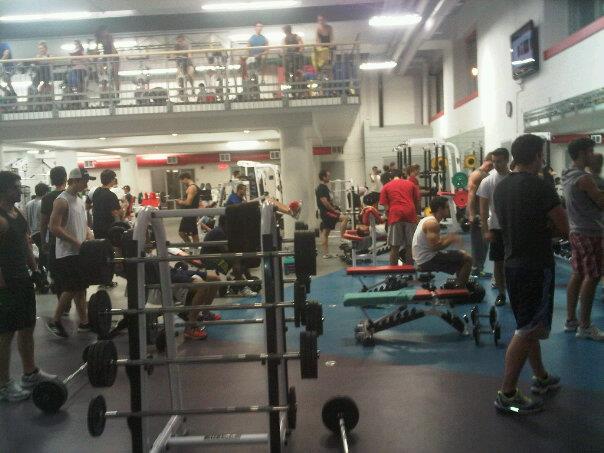
Peak hours at a typical commercial gym. The hidden cost is time and consistency, not money.
What Counts as a Private Gym
A private gym caps membership on purpose. The number of members is set by the size of the floor and the number of pieces of equipment, so the gym never gets crowded. Access is usually by key fob or appointment, not foot traffic. The whole product is designed around the assumption that you came here to train, not to socialize or wait for a rack.
A commercial gym does the opposite. It scales up. The business model depends on selling more memberships than the floor can comfortably hold, on the assumption that most members won’t show up consistently. Average commercial gyms run member-to-square-foot ratios that would be unworkable if everyone actually showed up at peak hours. They’re betting against you using what you paid for.
The Real Cost Comparison: 12 Months
Comparing membership prices alone is misleading. The advertised monthly rate at a commercial gym is usually the floor of what you’ll pay — there’s an enrollment fee, an annual maintenance fee, and any class or trainer access typically costs extra. A private gym usually has a higher monthly fee, but it’s the actual fee.
12-Month Cost Breakdown
What you’ll actually spend, line by line.
| Cost Category | Commercial Gym | Private Gym (e.g., The Compound) |
|---|---|---|
| Monthly membership | $30 – $80 | $99.99 flat |
| Enrollment fee | $50 – $200 | $0 |
| Annual maintenance fee | $50 – $70 | $0 |
| Towel service | Add-on or unavailable | Included |
| Locker access | Often $10-$25/mo extra | Included |
| Group classes | Sometimes included, often extra | No classes (gym is for individual training) |
| Contract | 12-24 months typical | No contract |
| Realistic 12-month total | $700 – $1,400+ | $1,199.88 |
The point isn’t that one is cheaper. It’s that the gap is smaller than the advertised monthly rates suggest, and the predictability is different. With a private gym, you know what you’re paying. With a commercial gym, the headline rate is the start of the conversation.
What Crowding Actually Costs You
The hidden cost of a commercial gym isn’t financial. It’s time and consistency.
20-30
Minutes added to a typical workout from waiting for equipment at peak hours.
2-3x
Sessions per week skipped or cut short because the floor was too crowded to train properly.
100+
Hours per year lost to crowding-related friction at a typical commercial gym.
If you train at peak hours — anywhere from 5:30 to 8 AM, or 5 to 8 PM — at a commercial gym, expect to wait for equipment. That means rushing through workouts, skipping exercises because the rack is taken, or extending your session by 20-30 minutes because you spent half of it waiting. Multiply that across a year of training and you’ve lost meaningful time and meaningful consistency.
A private gym solves this by capping membership. At The Compound, the cap is set so that even at the busiest hour of the busiest day, equipment is available. That’s not a marketing claim — it’s how the membership model is structured.

The Compound’s training floor — capped membership means equipment is available even at peak hours.
When a Commercial Gym Is the Right Choice
Plenty of people are well-served by commercial gyms. If you’re price-sensitive and the difference between $30/month and $90/month is meaningful, that’s a real factor. If your training schedule is genuinely off-peak — early afternoons or late nights when most members aren’t there — the crowding cost is much lower. If you want the variety of group classes, hot yoga, swimming pools, or other amenities a small private gym can’t offer, a commercial chain delivers more variety per dollar.
The honest read: commercial gyms are good at scale. They serve a wide range of fitness needs at a low entry price, and for someone whose goals fit that profile, they’re the right call.
When a Private Gym Is Worth the Premium
A private gym makes sense when the friction of a commercial gym is actually costing you something — your time, your consistency, your ability to do the workout you came to do. If you’re training seriously, training at peak hours, or training for outcomes that depend on consistency week over week, the math changes. A $30/month membership you use inconsistently is more expensive than a $90/month membership you use four times a week.
It also makes sense when privacy matters. Some members at The Compound are public-facing professionals — executives, performers, athletes — who don’t want to be on a crowded gym floor. The private model isn’t a luxury for them. It’s how training fits into their actual life.
What to Look for in a Private Gym
Not every gym that calls itself “private” is actually private. The market has gotten loose with the term. Here’s what actually matters when you’re evaluating one:
- Membership cap.A real private gym has a number — an actual cap on how many members can join. Ask. If the answer is vague, it’s not capped.
- Equipment quality.Look for serious commercial-grade brands — Woodway treadmills, Precor cardio, Hammer Strength or Eleiko on the strength side. Consumer-grade equipment in a “private gym” is a red flag.
- Trainer credentials.If personal training is part of why you’re considering a private gym, look at the trainers. Certifications like NASM, NSCA and ACSM are common. Years of practice matter more. Anyone can get certified, not everyone has trained people for ten or twenty years.
- Contract terms.Premium gyms shouldn’t need to lock you in. If a private gym is selling 12-month contracts and charging enrollment fees, they’re using the commercial gym playbook with private gym pricing. That’s the worst of both.
- The owner’s involvement.Many private gyms are owner-operated by trainers who built them. That’s usually a good sign — it means the gym is built around training, not around membership volume.
Inside The Compound: What $99.99/Month Includes
Since this is The Compound’s blog, here’s the honest breakdown of what membership covers.
The flat $99.99 monthly membership includes 24/6 access via key fob, full towel service, private showers, and use of the entire facility — Woodway Curve treadmills, Precor cardio, full free weight floor, dumbbells to 100 lbs, cable systems, sled track. There’s a one-time $50 key fob charge. No enrollment fee. No annual maintenance fee. No contract. Cancel any month with a written notice.
What’s not included: personal training. Sessions with Paul or any of the trainers operating at The Compound are billed separately. Rates are discussed during a free consultation, since the right rate depends on session frequency and what you’re training for. More on private personal training here.
The membership is built for one specific kind of person: someone who knows how to train, who values the quality of the floor and the quietness of it, and who doesn’t want their workout disrupted by the operational chaos of a commercial gym. If that’s not how you train, a commercial gym will probably serve you better.
How to Decide
Three questions cut through the rest:
- 1. When do you train?If it’s at peak hours, the crowding cost is real and a private gym pays for itself in saved time and consistency. If it’s off-peak, less of a factor.
- 2. How often do you actually train?Four-plus times a week, the per-session cost of a private gym drops below what most commercial gyms charge after add-ons. Two times a week or less, the math works the other way.
- 3. Does privacy matter?If yes, that’s a deal-breaker reason to go private. If you don’t care, the commercial gym’s social environment may even be a feature.
Most people who land on a private gym aren’t choosing it because it’s nicer. They’re choosing it because the way they train doesn’t work in a commercial gym anymore.
Frequently Asked Questions
Are private gyms worth the money? +
It depends on how often you train and when. If you’re training four-plus times a week at peak hours, the time and consistency you save offsets the higher membership fee — and after enrollment fees, contract terms, and add-ons at a commercial gym, the actual cost difference is smaller than the advertised rates suggest. If you train twice a week at off-peak times, a commercial gym will likely serve you better.
What’s the average cost of a private gym? +
Private gym memberships in major US cities range from roughly $80 to $300+ per month depending on amenities, location, and membership cap. The Compound is $99.99/month with no enrollment fee or contract — at the lower end of the private gym range, despite premium equipment and full amenities.
Do private gyms include personal training? +
Usually no — most private gyms separate membership from personal training. Membership covers facility access. Personal training with the gym’s trainers or independent trainers operating at the gym is billed separately. This is true at The Compound. The advantage is you’re not paying for personal training you don’t use.
Are private gym memberships negotiable? +
Generally no, and that’s a sign of a real private gym. If a “private” gym is willing to discount membership or run promotions, they’re operating on the commercial gym model — selling volume at varying rates. Real private gyms cap membership and price at the cap; there’s no incentive to discount.
What should I ask before joining a private gym? +
Four questions matter most. What’s the membership cap? What equipment brands do you use? What’s the contract length? What’s actually included in the monthly fee? If any of those answers are vague — especially the cap — it’s probably not actually private.
Considering a private gym in Woodland Hills?
The Compound is a private training club at 20662 Ventura Blvd. Membership is capped, no contracts, $99.99/month. Book a private tour or a free consultation with Paul to see if it’s the right fit.
Book a Tour →